On a median-priced Zebulon home — $359,000, across 766 Doorify MLS closings in the twelve months to July 2026 — a defensible due diligence fee is $550 to $1,250. Not $8,400. That larger number is 2% of Zebulon's $420,000 median active list price, and it prices a bidding war this market has not had. Only 15% of Zebulon sales closed above original list. The fee buys a walk-away option; price the option, not the convention.
The short answer
North Carolina is unusual. In most states a buyer can back out during inspections and lose nothing. Here, you hand the seller a non-refundable check up front for the privilege. That makes the due diligence fee a purchased option — you are paying the seller to hold the house off the market while you decide — and options are priced from the seller's alternatives, not from a percentage table.
So the real question is not "what's customary." It's: if I walk away, how quickly does this seller replace me? Our Doorify MLS mirror answers that street by street. Across 18,165 closed sales in the 20 Five County towns over the trailing twelve months, and 5,876 active listings as of July 2026, the answer almost everywhere east of Raleigh is slowly.
What the fee actually is under Form 2-T
Nearly every residential purchase in this region runs on the NC REALTORS / NC Bar Association Standard Form 2-T, Offer to Purchase and Contract. The current revision took effect July 1, 2026. Three things you need to know:
- Paragraph 1(d) sets the Due Diligence Fee, and it is paid directly to the seller — not into an escrow account, not to a brokerage trust account.
- It is non-refundable. The NC Real Estate Commission lists the narrow exceptions: a material breach by the seller, buyer termination under the Seller Obligations paragraph or the Risk of Loss paragraph, or an addendum that provides for a refund. Change your mind about the house, and the seller keeps it.
- It is credited to you at closing. If the deal closes, the fee comes off what you owe. Money spent, then recovered — but only on the deals that actually close.
The 2026 revision added one practical change worth knowing: the fee is still due on the Effective Date, but a buyer who misses that date is not instantly in breach. You now have until the end of the next banking day, and the seller must demand payment in writing and give a one-banking-day cure period before terminating. Paragraph 22 defines "banking day," excluding weekends and Federal Reserve holidays. It is a grace period, not a strategy — pay it on time.
Due diligence fee vs earnest money. Different money, different risk. The fee goes to the seller and is gone if you walk. Earnest money sits in escrow and comes back to you if you terminate before the Due Diligence Deadline. Both are credited to you at closing. Buyers who confuse the two routinely overpay the one that is actually at risk.
Note what the form does not say: there is no customary amount, no percentage, no minimum. The NC Real Estate Commission's own guidance is explicit that the amount is negotiable and shaped by "the market for the property, number of days on the market, personal circumstances of buyer and seller, and the length of the Due Diligence Period." That is the Commission telling you to do exactly what follows.
The 20-town leverage table
Here is every town we cover, from Doorify MLS closed-sale records for the twelve months ending July 2026. Days on market are medians, split into resale and new construction, because the blended figure is the single most misleading number in this market. National portals quote Zebulon at roughly 33 days to pending; across the 764 Zebulon closings with a recorded days-on-market value, the median was 98 days and the mean was 119. Both figures are honest. The portals are largely measuring resale inventory, and 61% of Zebulon's closings are new construction that sits listed from foundation to certificate of occupancy.
| Town | Active listings | Median DOM, resale | Median DOM, new build | Sold over original list | New-build share of closings |
|---|
| Zebulon | 276 | 69 | 118 | 15% | 61% |
| Wendell | 295 | 65 | 119 | 16% | 67% |
| Knightdale | 171 | 64 | 102 | 7% | 50% |
| Raleigh | 2,086 | 60 | 123 | 15% | 19% |
| Garner | 245 | 59 | 111 | 9% | 49% |
| Clayton | 501 | 66 | 120 | 11% | 30% |
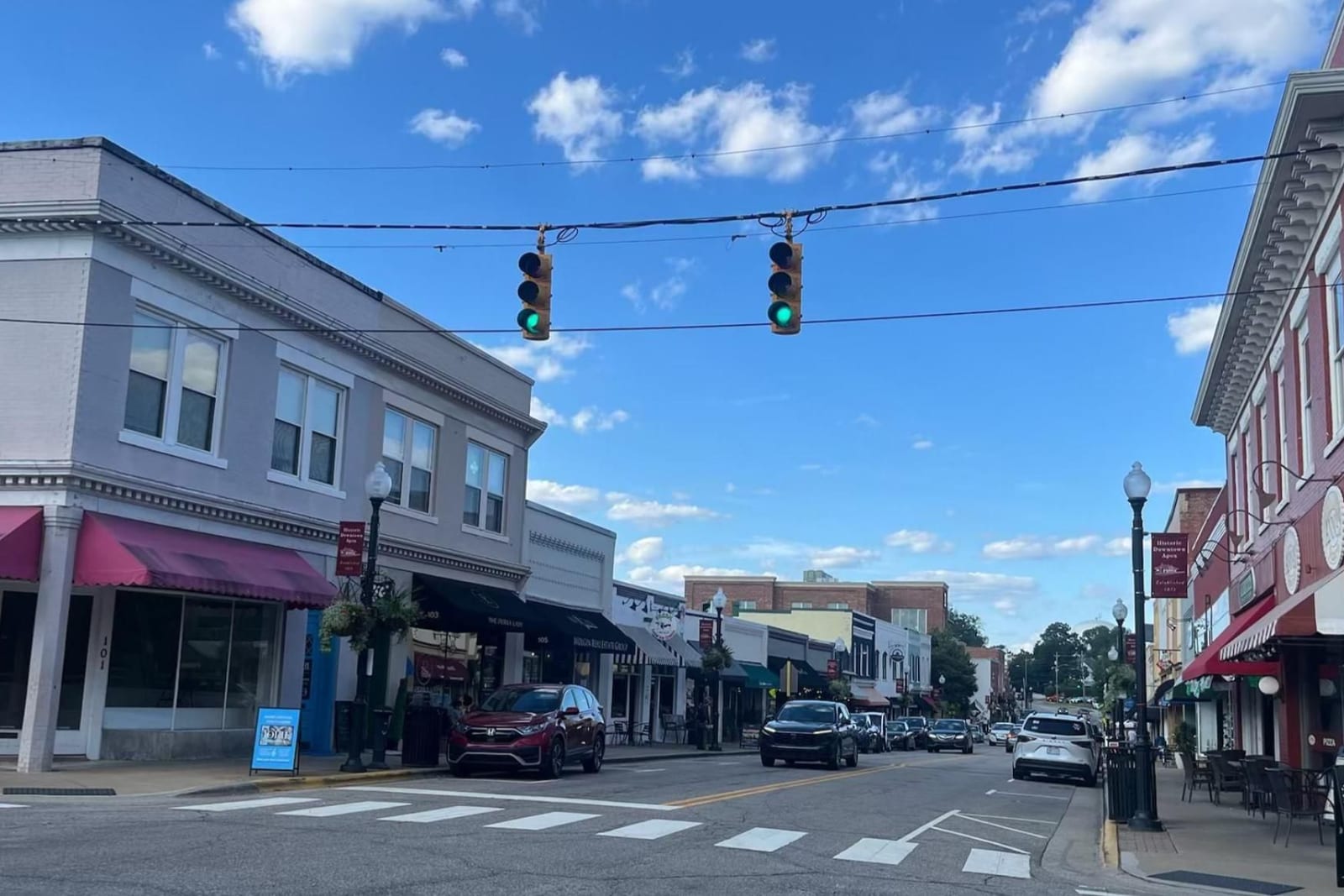
| Apex | 389 | 56 | 122 | 15% | 40% |
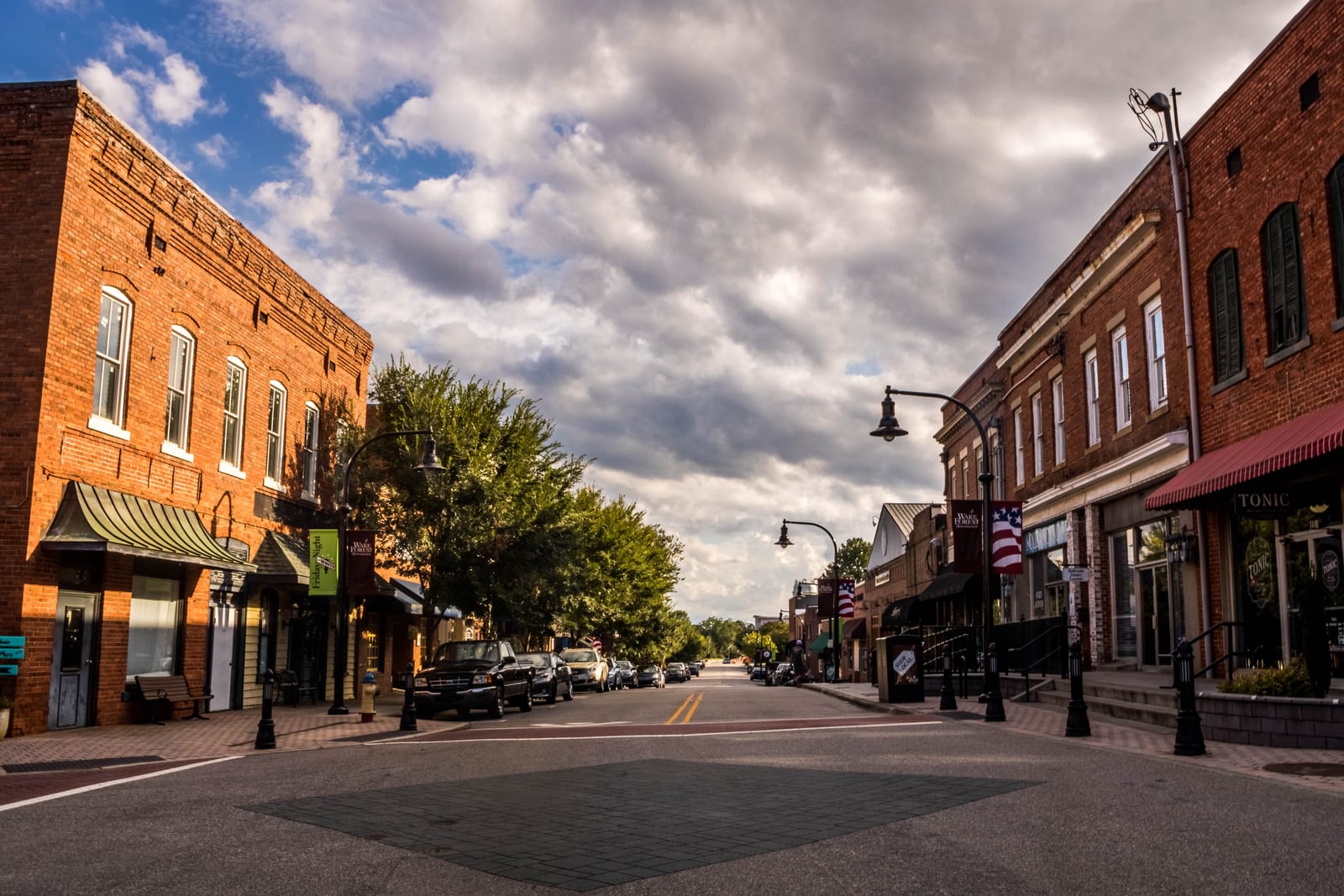
| Wake Forest | 548 | 61 | 137 | 10% | 32% |
| Rolesville | 128 | 70 | 83 | 10% | 66% |
| Smithfield | 189 | 69 | 127 | 13% | 54% |
| Selma | 123 | 57 | 151 | 13% | 50% |
| Benson | 154 | 59 | 168 | 6% | 48% |
| Louisburg | 154 | 74 | 100 | 9% | 34% |
| Youngsville | 204 | 70 | 127 | 10% | 46% |
| Franklinton | 87 | 68 | 121 | 12% | 51% |
| Nashville | 35 | 59 | 99 | 19% | 53% |
| Spring Hope | 66 | 62 | 108 | 19% | 66% |
| Middlesex | 77 | 67 | 111 | 17% | 65% |
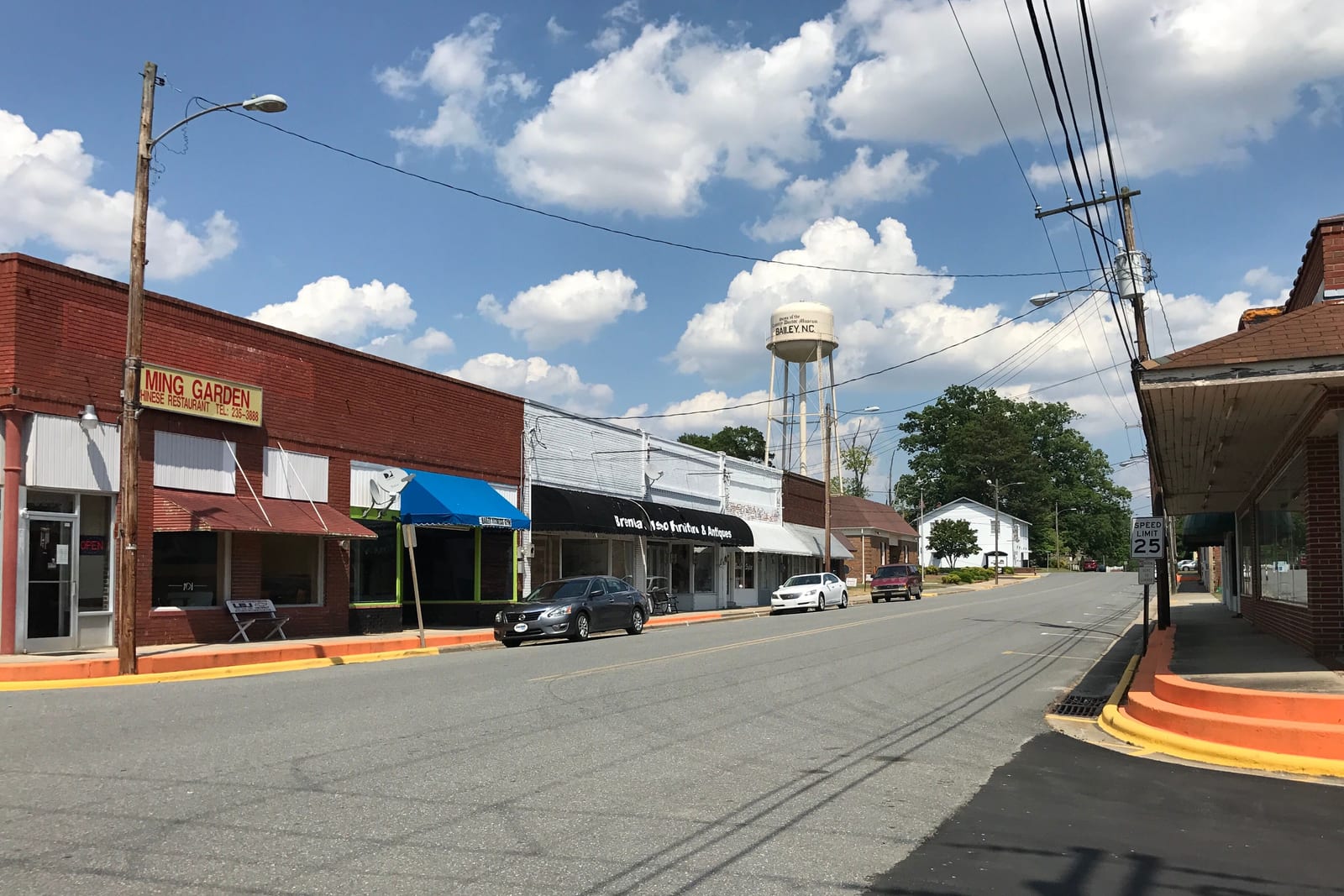
| Bailey | 60 | 60 | 112 | 21% | 67% |
| Wilson | 88 | 66 | 122 | 11% | 26% |
Read the fifth column again. The best seller leverage in the whole region is Bailey at 21% of sales closing above original list — which means 79% did not. In Benson it is 6%. There is no town in the Five County area where the median seller has the leverage that a 1%-of-price fee assumes. The small-town rows carry small samples (Nashville 139 closings, Bailey 130, Spring Hope 140), so treat those as directional; Zebulon, Wendell, Raleigh, Clayton and Apex each rest on hundreds to thousands of sales.
Turning leverage into a fee band
We sort towns with one reproducible rule off the table above, then attach a fee band. You can check our arithmetic against the same columns.
| Tier | Rule | Towns | Fee band |
|---|
| A — firmest | Resale DOM 65 or under and 13%+ of sales over original list | Apex, Raleigh, Wendell, Selma, Nashville, Spring Hope, Bailey | 0.30%–0.60% of price |
| B — balanced | 11%+ over list, resale DOM 66+ | Zebulon, Middlesex, Smithfield, Franklinton, Clayton, Wilson | 0.15%–0.35% of price |
| C — buyer leverage | 10% or fewer sales over list | Knightdale, Garner, Louisburg, Youngsville, Wake Forest, Rolesville, Benson | 0.05%–0.20% of price |
Translated into dollars, for a Tier B town like Zebulon or Wilson:
| Purchase price | Tier B fee band | Tier A adjustment | Tier C adjustment |
|---|
| Under $250,000 | $400 – $900 | roughly double | roughly half |
| $250,000 – $350,000 | $400 – $1,200 | roughly double | roughly half |
| $350,000 – $500,000 | $550 – $1,750 | roughly double | roughly half |
| $500,000 – $750,000 | $800 – $2,600 | roughly double | roughly half |
| Over $750,000 | $1,200 – $3,500 | roughly double | roughly half |
Be clear about what these are. Doorify MLS does not carry a due diligence fee field — the amount lives in the contract, not the listing — so nobody, including us, can publish a measured "average due diligence fee for Wake County." Anyone quoting one to the dollar is guessing. What we can do is publish the leverage data honestly and show the arithmetic that turns it into an offer. These are the bands we negotiate to, and they are derived, not surveyed.
Then adjust for the specific house. Subtract toward the bottom of the band, or to zero, when the listing is past 90 days, has taken a price cut, is a completed builder spec unit, or when the seller has already bought elsewhere. Move to the top of the band when the house is new to market, correctly priced, and in a pocket where inventory turns.
Zebulon vs Wilson: the anchor contrast
These two towns sit 25 minutes apart and behave nothing alike, which is why a single regional rule of thumb fails.
Zebulon. As of July 2026 the median active list price is $420,000, while the median closed sale over the trailing twelve months was $359,000. That $61,000 gap is not a 15% discount waiting for you — part of it is mix, since 158 of Zebulon's 276 active listings are new construction and skew high, and closings include older resale stock at a $340,000 median. But part of it is real negotiating room: Zebulon sales closed at an average of 97.8% of original list price. On a $420,000 asking price, the average outcome is roughly a $9,200 concession. Handing that seller $8,400 non-refundable, up front, to secure the right to inspect, hands back nearly every dollar of the roughly $9,200 you were about to negotiate off.
Wilson. Median closed sale $257,690 on 276 closings, median active list $264,900, and an average sale-to-original-list of just 94.2% — the softest in the region. New construction is only 26% of Wilson closings, so the resale market is the market there, and resale runs a 66-day median. A four-figure due diligence fee in Wilson buys leverage that measurably does not exist. Our band on a median Wilson house is $400 to $900.
Full context for either market: Zebulon area guide and Wilson area guide.
When a strong fee still wins
The inverse case is real, and buyers who overcorrect lose houses. Go to the top of your band, or above it, when:
- The house is under $300,000 and move-in ready. In our own transactions, entry-level move-in-ready resale is the segment that most often draws competing offers — Doorify MLS days on market is not broken out by price band, so treat that as our experience rather than a measured figure. Wilson's resale median sale price is $239,900 and Selma's is $280,000 — those listings draw multiple offers even while the town-wide numbers look soft.
- You are competing on days one through seven. A median is the midpoint of a distribution, not a description of every sale; in our experience the listings that finish above original list do it in the first week or not at all, and that is precisely where a stronger fee is the cheapest concession you can make — cheaper than raising your price, which the appraisal has to support.
- You need a long Due Diligence Period. Forty-five days for a construction loan, a well and septic evaluation, or a contingent sale is a real cost to the seller. Pay for the time you are actually taking.
- You are asking the seller to take a risk. Contingent on your own sale, a VA or USDA file with a tight timeline, a rehab loan — the fee is how you make an uncertain offer credible without raising price.
The builder exception
Production builders are the largest sellers in this region — new construction is 61% of Zebulon closings, 67% in Wendell and Bailey, 66% in Rolesville and Spring Hope. On a home that is still to be built, most builders want a meaningful deposit and will hold to it, because they are financing construction against your contract. On a completed spec home already standing and carrying interest, the calculation flips entirely: many builders will take a token due diligence fee, sometimes $0 to $500, and put their negotiating energy into rate buydowns and closing-cost credits instead. Zebulon's median new build sat on the market 118 days before going under contract, and Wake Forest's 137. That is a lot of carry. Ask. Our new construction vs resale comparison covers how the two negotiations differ.
The cash-to-close worksheet
The fee is one line in a bigger number, and the bigger number is where buyers get surprised. Two North Carolina specifics decide how much of it you can control:
Title insurance: do not bother shopping it. North Carolina title insurance rates are filed by the NC Title Insurance Rating Bureau and approved by the NC Department of Insurance, and they apply to any policy insuring NC property regardless of which underwriter issues it. Under the schedule effective October 1, 2025 and in force through 2026, the owner's policy runs $2.78 per $1,000 of coverage on the first $100,000 and $2.17 per $1,000 from $100,001 to $500,000, with a $56 minimum and a $28.50 simultaneous-issue charge for the lender's policy. Every underwriter in the state charges the same. Shopping title insurance in NC is wasted effort.
The attorney fee is not filed, and is worth shopping. North Carolina is an attorney-closing state; you hire the closing attorney. Flat fees for a straightforward 2026 residential closing are commonly quoted in the $750 to $1,250 range, with the Raleigh-area average nearer $800. Ask for the flat fee and what it includes — title search and exam are sometimes inside it and sometimes billed separately, which is where two quotes that look $200 apart end up $500 apart.
| Line item | Zebulon at $359,000 | Wilson at $257,690 |
|---|
| Due diligence fee (our band, credited at closing) | $550 – $1,250 | $400 – $900 |
| Earnest money (escrowed, credited at closing) | negotiable, typically 1% | negotiable, typically 1% |
| Home inspection, paid during due diligence | $400 – $600 | $400 – $600 |
| Appraisal, paid during due diligence | $375 – $500 | $375 – $500 |
| Down payment at 5% conventional | $17,950 | $12,885 |
| Owner's title policy (state-filed rate) | $840 | $620 |
| Lender's policy, simultaneous issue | $28.50 | $28.50 |
| Recording: deed $26 + deed of trust $64 | $90 | $90 |
| Closing attorney flat fee | $750 – $1,250 | $750 – $1,250 |
| Fixed NC closing items, subtotal | $1,709 – $2,209 | $1,489 – $1,989 |
| Lender origination, prepaid interest, tax and insurance escrows | from your Loan Estimate | from your Loan Estimate |
| NC excise tax ($2 per $1,000) | seller pays | seller pays |
Title premiums above are calculated from the filed Rating Bureau schedule on the full purchase price. The excise tax line is there because buyers ask: in North Carolina the seller pays it, so it is not your money. Everything below the subtotal is lender-specific and belongs on a Loan Estimate, not in a blog post — anyone who quotes you those to the dollar without pulling credit is inventing them. Run your own scenarios with the buyer resources and mortgage calculator, and see our first-time buyer guide for Wake County for the full timeline.
Before you write the check
Three questions, in this order. How many days has this listing been on the market, and has it taken a price cut? Is it resale or builder inventory — because 118 days on a new build means something different than 118 days on a 1998 ranch? And what does the seller's next-best offer look like if you walk, which is a question about the six closest comparable actives, not about the town median?
Answer those three and the fee sets itself. Skip them and you are paying national convention in a market that has never matched it.
Send us the address before you write the offer and we will pull the listing history, the closest comparable actives and the last twelve months of closed sales on that street, and come back with a due diligence fee number and the reasoning behind it. Same for the cash-to-close worksheet at your actual price point, itemized. Ask for a fee recommendation, or start with what is currently active in your range on our MLS search.
Market figures are from Insight Residential Realty's Doorify MLS mirror, residential closed sales for the twelve months ending July 2026. Fee bands are our recommendations derived from that data, not a survey of executed contracts. This is general information about how the Form 2-T mechanics work and is not legal or tax advice — your closing attorney should review your specific contract.